VPN for Linux
A graphical VPN app for Ubuntu and Debian. Install one .deb package, sign in and protect every program on your machine, terminal included.
The Linux app is included in Browsec Premium.
How to install Browsec VPN on Linux
Four steps from checkout to a protected system:
-
01
Get Premium
The Linux app comes with Browsec Premium. Buy a plan first. The package is free, and one plan covers up to 5 devices.
-
02
Download the package
Get the .deb for Ubuntu or Debian (x64) from the cards above. If GitHub is blocked where you are, use a mirror.
-
03
Install the package
Double-click the file to open it in your software center, or run sudo apt install ./browsec-desktop_*.deb in a terminal from the download folder. apt installs any missing dependencies automatically.
-
04
Sign in and connect
Launch Browsec from the applications menu, log in with your Premium account, pick a location and click Connect.
Why use a VPN on Linux
The whole system, terminal included
Your internet provider and anyone on the same network see only encrypted traffic. That covers Firefox and Chromium, Telegram and Thunderbird, and command-line tools like curl, git and wget.
Hide your real IP
Websites and online services see the IP address of a Browsec server, not yours. Streaming platforms and other services work as if you were in the country you picked.
You decide what goes through the VPN
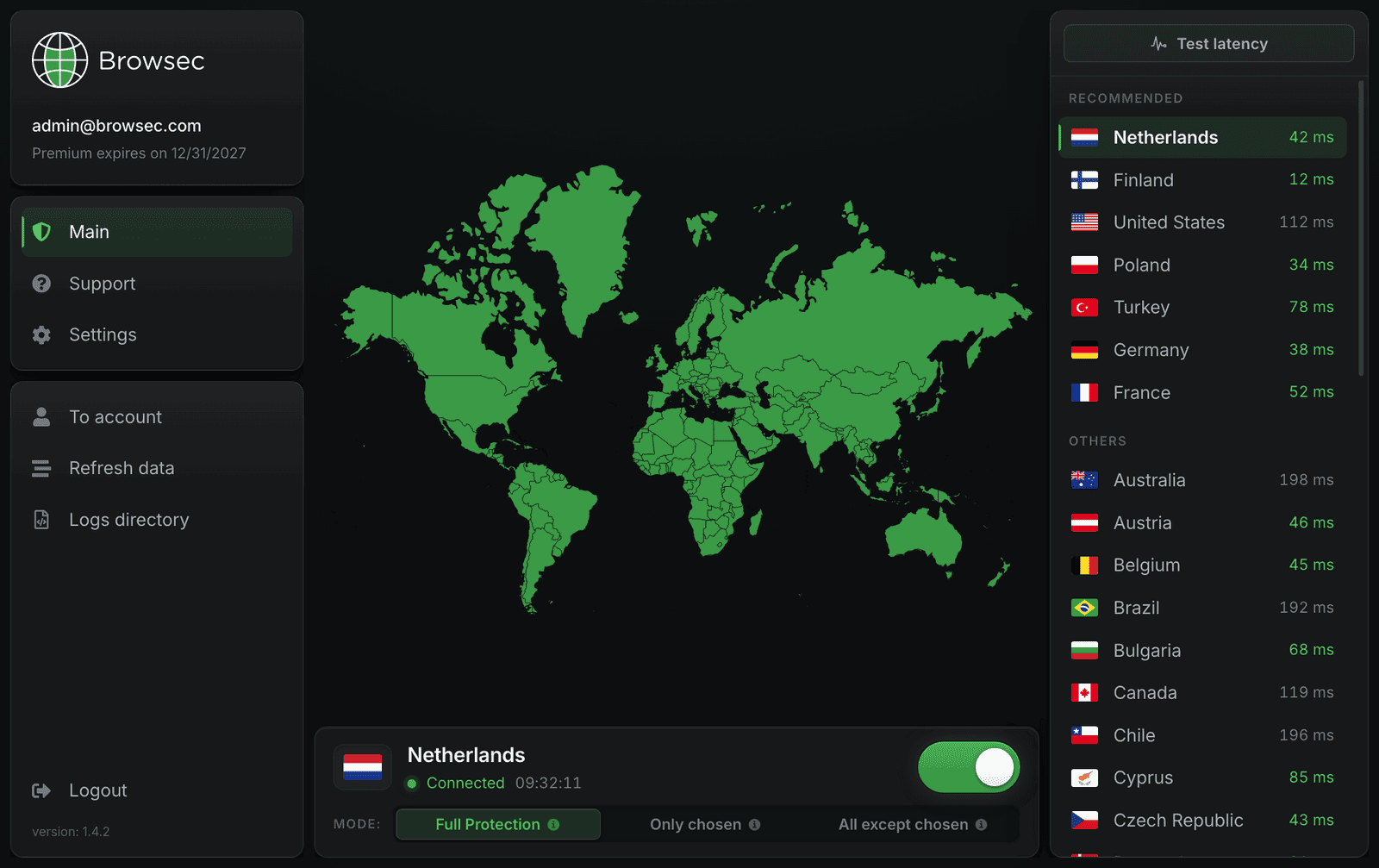
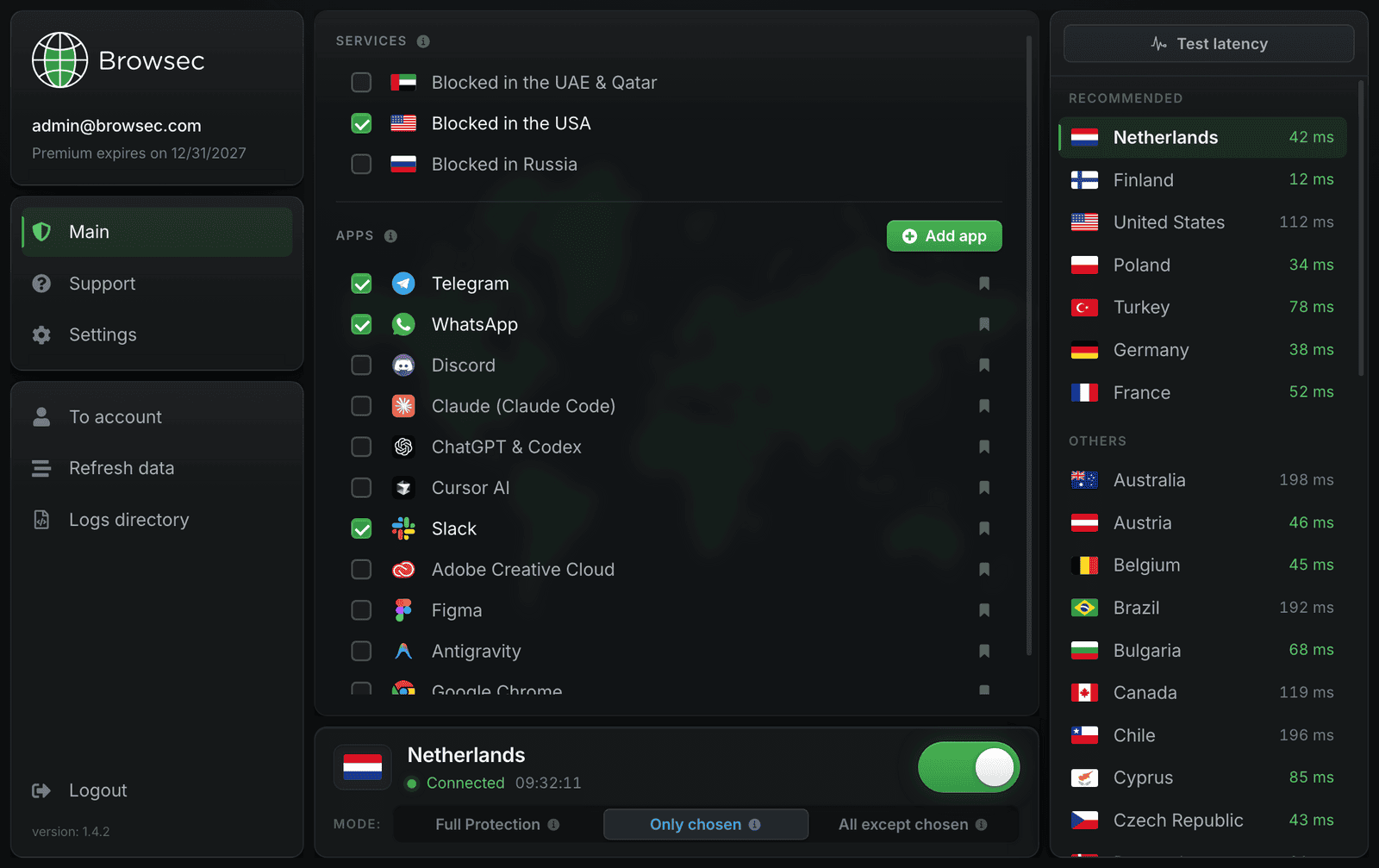
The location list shows live ping, so you can pick the fastest server. Smart Rules (split tunneling) let you protect only the apps you choose, or everything except the ones you want on a direct connection.
A Linux VPN without config files
No manual setup
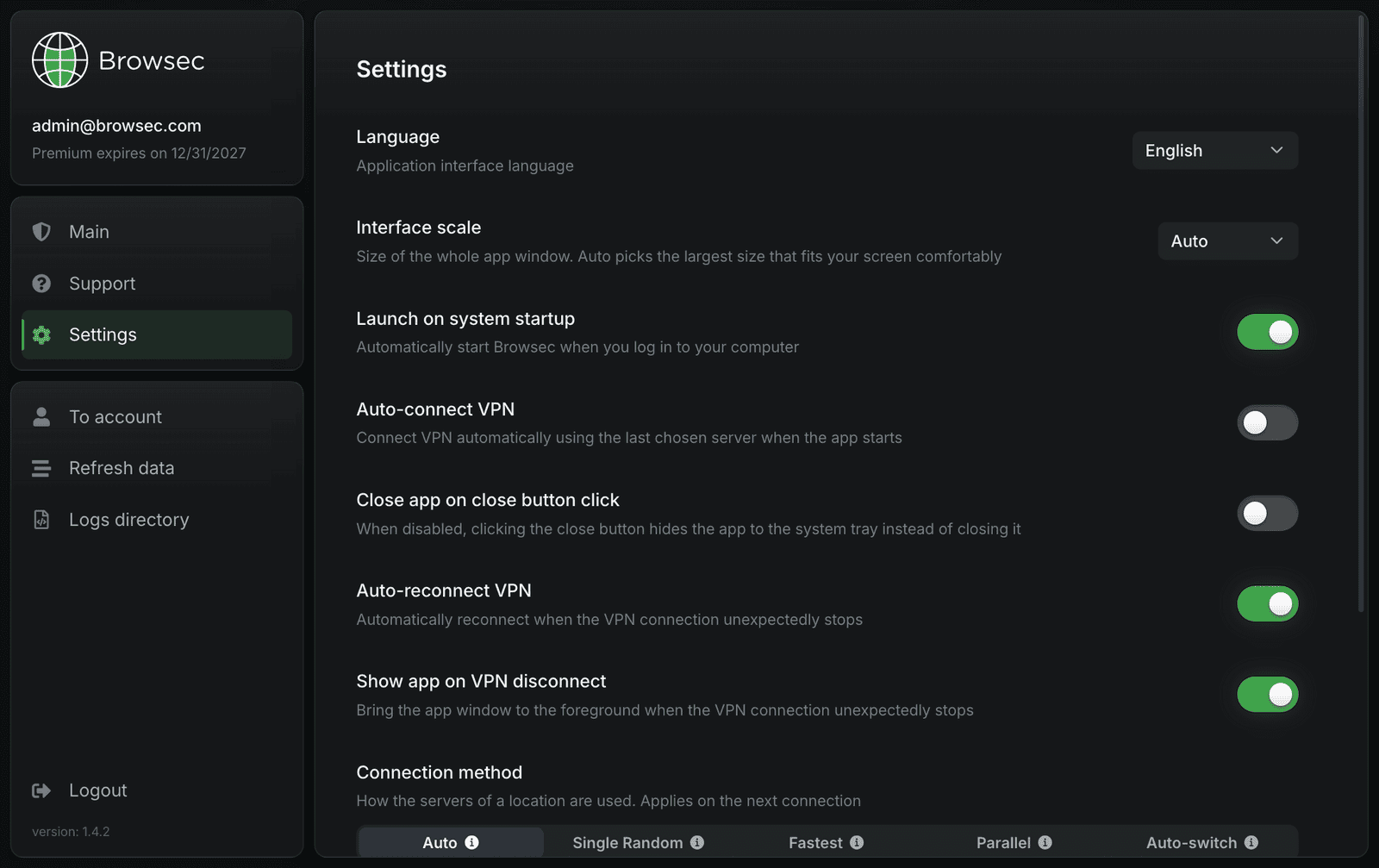
No config files to download, no certificates to import, no network settings to edit. Install one package, sign in and pick a location in a graphical app.
Starts with your session
The app can launch when you log in and connect to your last server before you open a browser. If the connection drops, it reconnects on its own.
Safe on any network
On café, hotel or conference Wi-Fi the whole system connection is encrypted, so someone on the same hotspot can't read your traffic.
What you get with Browsec VPN for Linux
Worldwide connection
46 server locations across Europe, the Americas, Asia, Africa and Australia, including two in the US. Switch between them in one click.
Every program, not one browser
A browser extension protects one browser. The Linux app protects the whole machine: all browsers, messengers, mail clients and terminal tools.
One click, no terminal needed
Connect and disconnect with a single click in the app window. The rest of the time it runs in the background.
Three protection modes
Full Protection sends all traffic through the VPN. Only chosen protects just the apps and sites you tick. All except chosen protects everything apart from what you exclude.
What people say about Browsec
Q8DiverBrowsec is the best VPN app ever, excellent job developers 👍 keep going
DaryedJust amazing!!! If you travel to a country with blocked apps this will be your best friend. Especially for videocalls if you are in the emirates.
Muhammad Sajjad HussainReally find a wonderful VPN app, also be a premium user, find it most suitable and user friendly in all aspects as stated in its description. Thumbs up.
Stoyan9Tried many times in diff countries, never fails
Get started with Browsec VPN for Linux
7-day money-back guarantee